
Wir alle lernen unser ganzes Leben lang, absichtlich oder instinktiv, aber kennen wir die Bedeutung des Lernens?
“Genie ohne Bildung ist wie Silber in der Mine” (Benjamin Franklin)
Learning = education?
In this article, I would like to explain with simple words what learning means and how it takes place in the brain.
- Die Bedeutung des Lernens durch Definitionen
- Die Bedeutung des Lernens aus Sicht der Kognitionswissenschaft
- Die Bedeutung des Lernens aus Sicht der Neurowissenschaft
- The learning process
Babies learn everything without being taught to learn. Although we are not taught to learn we do it instinctively. At the age of seven, we go to school and continue to learn instinctively because we have no “learning” class. We learn many subjects besides how to learn. This one we have to figure out by ourselves.
“Wir werden mit der Fähigkeit geboren, zu lernen, ohne etwas zu wissen und ohne etwas wahrzunehmen.”(Jean-Jacques Rousseau)
Die Bedeutung des Lernens durch Definitionen
Let’s see some definitions.
1. The meaning of learning given by the dictionary is:
“der Erwerb von Wissen oder Fähigkeiten durch Studium, Erfahrung oder Unterricht.”
2. Die Bedeutung, die ein kognitiver Neurowissenschaftler, Stanislas Dehaene, is:
“zu lernen bedeutet, ein internes Modell der Außenwelt zu bilden. Es mag Ihnen nicht bewusst sein, aber Ihr Gehirn hat Tausende von internen Modellen der Außenwelt erworben”.
3. The meaning of learning according to neurobiology: “lLernprozesse sind mit Veränderungen im Gehirn verbunden und betreffen das Arbeitsgedächtnis und das Langzeitgedächtnis”.
I will go one by one through the definitions and explain how learning happens in order to be able to improve it.
The purpose of learning is the acquisition of skills and knowledge, this makes the first definition pretty obvious. Any further explanations would be redundant.
The relevant questions here would be: how do we acquire the knowledge? how do we store it?
Die Bedeutung des Lernens aus Sicht der Kognitionswissenschaft
A partial response comes from the definition of Stanislas Dehaene. When it comes to learning, we create an internal model of the external world. This does not refer to how we perceive the outside world, the world is perceived differently by each of us because it is created in our mind, by our mind. It refers to how we store knowledge and information about the world. We learn in dem wir Modelleerstellen..
“The brain converts your perceptions into chemical and electrical changes that form a mental representation of the patterns you’ve observed” (Brown, Roediger III, McDaniel – make it stick)
Je gründlicher Sie ein Thema lernen, desto präziser ist das interne Modell, das es repräsentiert. Falsche Informationen oder ein falsches Verständnis der gelernten Informationen tragen zur Bildung falscher Modelle bei.
Just an example of a wrong mental model. A geography teacher tested his students’ knowledge about the shape of the earth, in the very first class. All of them knew that the earth was round, but when they were asked to make a graphical representation of it, they draw a circle, not a sphere. Or they said: “the earth is round like a pie”.
Some of them had imagined the earth round but flat and this is such a wrong internal model. In such cases, the internal model has to be corrected.
The meaning of learning by neuroscience
Let’s now look at the meaning of learning in neuroscience.
The brain is made up of distinct nerve cells. The brain cells are called neurons and we have approximately 86 billion of them. Those neurons are not standalone but are interconnected (Cajal’s discovery in 1906 for which he took the Nobel prize) with other neurons, by up to 40,000 individual connections, forming neuron networks.

A connection between two neurons is called a synapse. Multiplying the two above numbers results in the number of all possible neurons connections in the brain. This is higher than there are stars in the universe. Could you now imagine what means, in neuroscience, that we do not use our brain at full capacity? ( we don’t manage to create all possible neurons connections).
How learning takes place in the brain
Es ist wichtig, sich diese Zahl vorzustellen, denn neurons’ connections are the key to learningWenn wir neue Dinge oder Fähigkeiten lernen, bilden wir neue Synapsen zwischen den Neuronen. Es gibt 2 Möglichkeiten, neue Synapsen zu bilden:
- wir bilden Synapsen zwischen Neuronen, die noch nicht verbunden waren
- wir bilden zusätzliche Synapsen zwischen bereits verbundenen Neuronen.
“Jedes Mal, wenn wir etwas Neues lernen, verarbeitet das Gehirn die Informationen über die Sinne und bildet neue Schaltkreise, die in den Neuronen die Erinnerung an das Gelernte verankern.” (Joe Dispenza – Evolve your brain)
“Neuronen, die zusammen feuern, vernetzen sich auch miteinander” this sentence was used by Donald Hebb in 1949 to explain how pathways are formed in the brain. Those are the brain changes that appear while learning takes place. At this point I think is crucial to explain how the synapses evolve from young ages till maturity.
Evolution of synapses
You would now be tempted to think that we are born with fewer connections and we create them while we grow old and learn things. In reality, things are the other way around.
“In der frühen Kindheit erreicht die Synapsendichte das Doppelte der Dichte eines Erwachsenen, und erst dann nimmt sie langsam ab. In jeder Region des Kortex folgen auf unaufhörliche Wellen der Überproduktion ein selektiver Rückzug nutzloser Synapsen oder, umgekehrt, eine Vermehrung derjenigen Synapsen und dendritischen und axonalen Verzweigungen, die sich bewährt haben” (Stanislas Dehaene – Wie wir lernen)
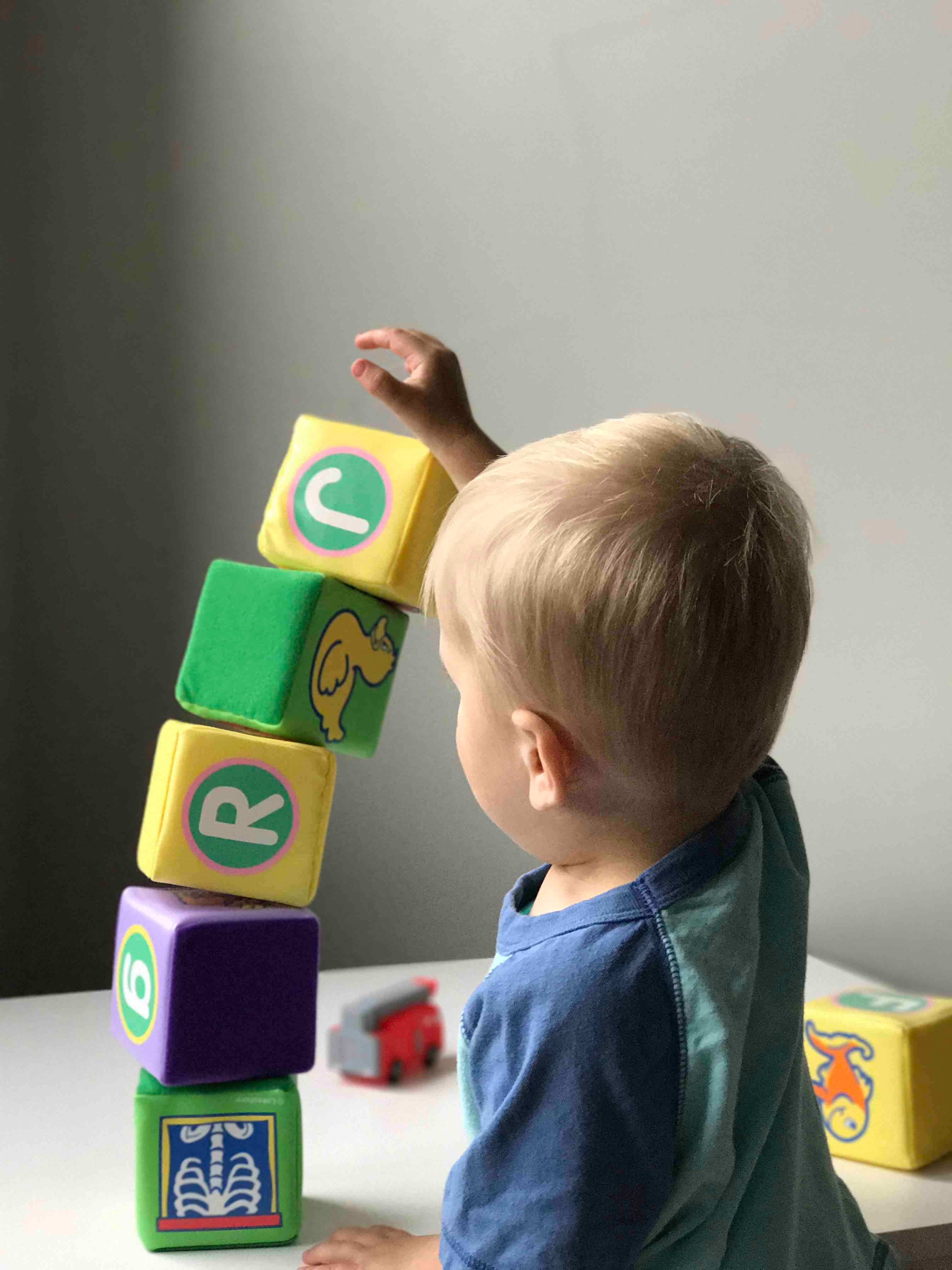
In other words, in the first two years of life, the neuronal trees grow a lot. It is considered that at the age of four the forest of neurons reaches its maximum. And then according to the principle “if you don’t use it you lose it”, the synapses that are not used disappear, in the process called pruning. Those that are used are reinforced and further developed (now it makes sense why children learn more easily languages).
The synaptic connections changes according to what it begins to know, remember and recognize. The same happens also with the connections of the neurons in adults. The networks that are not reactivated in the process of recalling the knowledge lose connections and in course of time, the information will be forgotten. And this is how forgetting takes place in the brain.
Memory
Let’s see now how memory is involved in the process. Humans have more types of memory. Hier ist ein Artikel über alle Arten von Gedächtnis, die wir haben, wie sie die Informationen speichern und wie lange. Wenn wir uns neue Prinzipien, neues Wissen aneignen, speichern wir die Informationen im Arbeitsgedächtnis. Während des Schlafs werden die Informationen in das Langzeitgedächtnis übertragen.
Humans’ sleep has 5 sleep cycles (when humans sleep enough, which rarely happens). Each cycle has 3 types of phases: light sleep, deep sleep, and REM sleep. The REM (Rapid Eye Movement) phase is the one responsible for building memories. During the REM the information from the working memory is transferred to long-term memory. More details about the sleep architecture and how to calculate your time to go to bed in order to have as many REM sleep phases as possible, you can find out in diesem Video..
The learning process
Lernen besteht aus 2 Prozessen:
- 1. Kodierung der Informationen = Einprägen
- 2. Informationenwiederfinden = Abrufen
Efficiency in learning is mainly measured by how much and how accurately we can remember the information and not how long we have learned. And here contribute some factors like die Zeit, die wir einer Lernsitzung widmen, Aufmerksamkeit für die gelernten Informationen, wie schnell die neu gelernten Informationen angewandt/erfahren werden, wie schnell und wie oft die Informationen aus dem Gedächtnis abgerufen werden und wie das Gehirn bei der Bildung der neuen Schaltkreise unterstützt wird.
Sie haben bestimmt schon von der Assoziation als unterstützende Methode für das Lernen neuer Dinge gehört. Wenn wir ein neues Prinzip oder einen neuen Sachverhalt, den wir lernen wollen, mit einem bereits bekannten assoziieren, aktivieren wir die neuronalen Schaltkreise, die die alten Informationen enthalten, und bilden gleichzeitig den neuen Schaltkreis für die neuen Informationen. So verknüpfen wir den neuen Schaltkreis mit dem alten und schaffen Stabilität.
Remembering is also pretty much dependent on what we are learning. If we learn a skill, the best learning is repetition, practicing that skill as often as possible.
But is repetition the only key ingredient to learning?
There are some basic steps that support efficient learning, they are generally described in den 4 Lernsäulen beschrieben.. Those steps have to be repeated cyclicly until the desired level of expertise is reached.
Benjamin Barber, ein politischer Theoretiker, sagte:
“I don’t divide the world into the weak and strong, or the success and the failures … I divide the world into the learners and nonlearners“.

 Deutsch (Sie)
  English